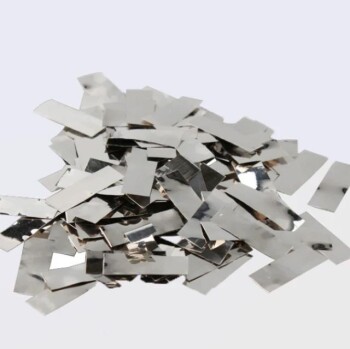
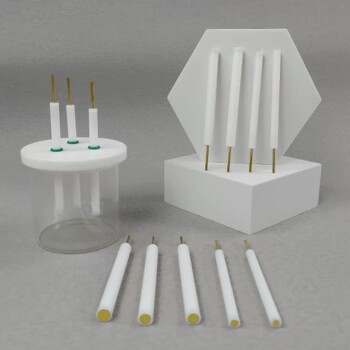
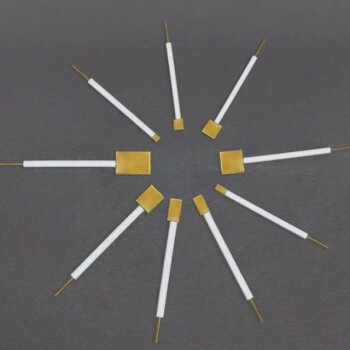
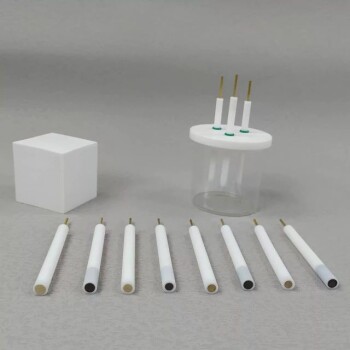
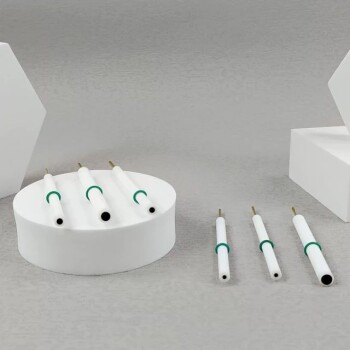
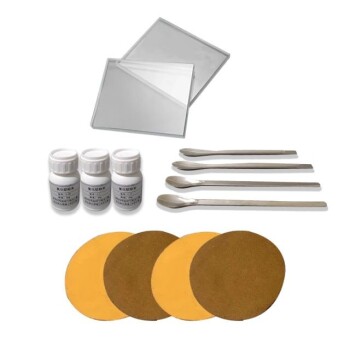
Platinum serves as the chemically inert counter electrode in electrolytic etching, acting as the critical anchor for the electrical circuit. It withstands high voltages and corrosive electrolytes without dissolving, ensuring the current path remains stable while preventing impurity ions from contaminating the solution.
In electrolytic etching, platinum is strictly selected for its chemical stability and conductivity. It facilitates the controlled anodic dissolution of the stainless steel sample, allowing for precise revelation of grain boundaries and phase distributions without the risk of electrode corrosion interfering with the analysis.
The Mechanics of the Platinum Electrode
Ensuring Chemical Stability
The primary function of platinum in this process is to act as a non-reactive counter electrode. When subjected to corrosive electrolytes like 10% oxalic acid or 30% KOH, platinum resists dissolution.
This resistance is vital because a dissolving electrode would release metal ions into the electrolyte. Such contamination would alter the chemical composition of the bath and skew the etching results.
Maintaining Stable Current Distribution
Platinum provides high electrical conductivity, serving as the necessary completion of the current loop. It ensures a stable distribution of polarization current throughout the electrolytic cell.
By maintaining this stability, the platinum electrode guarantees that the electrical potential applied to the stainless steel (the working electrode) remains accurate. This allows the researcher to maintain a constant voltage (e.g., 5V or 9V) for consistent results.
Enabling Selective Corrosion
Revealing Microstructural Features
The stable current facilitated by the platinum electrode promotes controlled anodic dissolution. This process selectively attacks specific features of the steel, such as grain boundaries and carbide phases.
For example, in sensitized stainless steel, this controlled etching clearly reveals grain boundary features. It exposes precipitate distributions without damaging the bulk structure of the material.
Creating High Phase Contrast
The precise control provided by platinum allows for differential etching rates between phases. In duplex stainless steel, this results in significant contrast between ferrite (which may appear dark gray) and austenite (light gray).
This visual differentiation is essential for quantitative analysis. It allows researchers to accurately measure phase fractions and grain sizes under an optical microscope.
Understanding the Trade-offs
The Risk of Electrode Corrosion
The primary "trade-off" in electrolytic etching is not regarding the platinum itself, but the risk of using inferior alternatives. Using a less stable metal as a counter electrode can lead to the electrode reacting with the electrolyte.
Impact on Analysis Integrity
If the counter electrode reacts, it introduces noise to the electrochemical system. This can lead to uneven etching or false artifacts on the stainless steel surface, compromising the visual basis for analyzing failure mechanisms like stress corrosion cracking.
Making the Right Choice for Your Goal
To achieve accurate metallographic characterization, your setup must prioritize electrochemical stability.
- If your primary focus is quantitative phase analysis: Use platinum to ensure stable voltage application, creating the high contrast necessary to distinguish between ferrite and austenite phases.
- If your primary focus is detecting sensitization: Rely on platinum's inertness to prevent electrolyte contamination, ensuring that the etching of grain boundaries is due to material properties, not solution impurities.
The choice of platinum transforms the etching process from a rough chemical attack into a precise analytical tool.
Summary Table:
| Feature | Role of Platinum Electrode | Benefit for Stainless Steel Analysis |
|---|---|---|
| Chemical Inertness | Resists corrosion in harsh electrolytes (KOH, Oxalic Acid) | Prevents contamination and ensures result integrity. |
| Conductivity | Maintains stable electrical potential and current loop | Ensures consistent etching at specific voltages (5V/9V). |
| Selective Dissolution | Facilitates controlled anodic attack on grain boundaries | Clearly reveals carbides, phase distributions, and sensitization. |
| Phase Contrast | Enables differential etching rates between phases | High visual contrast between ferrite and austenite for analysis. |
Elevate Your Metallographic Research with KINTEK Precision
Achieve uncompromising accuracy in your material characterization with KINTEK’s premium electrolytic cells and platinum electrodes. Whether you are performing quantitative phase analysis or detecting grain boundary sensitization, our specialized laboratory equipment ensures the electrochemical stability your research demands.
Why choose KINTEK?
- High-Performance Electrodes: Durable, chemically inert platinum and auxiliary components for stable etching.
- Comprehensive Lab Solutions: From high-temperature furnaces and crushing systems to advanced battery research tools.
- Precision Engineering: Designed for metallurgical labs requiring high contrast and repeatable results.
Don't let electrode contamination compromise your data. Contact KINTEK today to optimize your electrolytic etching setup!
参考文献
- R. Clark, G. Williams. The role of niobium carbides in the localised corrosion initiation of 20Cr-25Ni-Nb advanced gas-cooled reactor fuel cladding. DOI: 10.1016/j.corsci.2019.108365
この記事は、以下の技術情報にも基づいています Kintek Solution ナレッジベース .
関連製品
- 実験室および産業用途向けの白金シート電極
- 電気化学用途向け回転白金ディスク電極
- バッテリーラボ用途向け白金シート電極
- 実験用白金補助電極
- RRDE 回転ディスク(リングディスク)電極 / PINE、日本ALS、スイスMetrohm ガラスカーボン プラチナ対応